Tuesday, September 6, 2011

Dell ties up with Baidu for smartphones and tablets

After its newly announced mobile OS Baidu Yi, Dell ties up with Baidu for smartphones and tablets..


Baidu Yi  is based on Android, but the OS sports Baidu’s apps and services instead of Google android apps..


Dell, previously released Android-based products Streak tablet and a couple of phones which really dint impress consumers. lets just hope this works for them in china's massive mobile user base of over 900 million.

Froyo all the way...

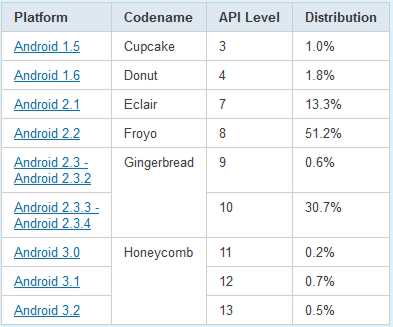
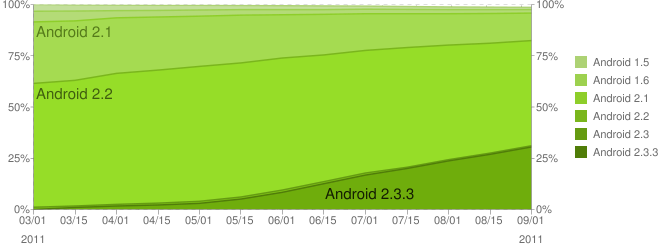
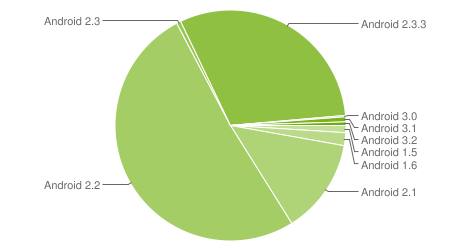
While android is capturing a large pie of the smartphone market guess which one of its flavors is most popular? 

This is the latest report released by Google on its platforms versions distribution  :


androidpiechart

 
androidtable

 
androidareachart
(Click on chart to expand)


Thursday, March 3, 2011

Panasonic has taken the veil off from its new BizPad or JT-H380VT.

The new device is all weather, dust-proof, shockproof and waterproof tablet, so now question on its reliability. Sporting 6.5” touchscreen screen, the device has a 1.3 MP Front facing camera and 2 MP rear camera with LED light.

Aircel expands 3G coverage to AP, Kerala, J&K

Aircel now provides 3G services in Hyderabad, Cochin, Srinagar, Chennai, Bengaluru, Lucknow, Kolkata, Patna, Guwahati and Bhuwaneshwar.

Aircel has launched 3G mobile and data services in three more circles in Andhra Pradesh Hyderabad), Kerala (Cochin) and Jammu and Kashmir (Srinagar), taking the tally to ten.

Earlier, the teleco has earlier launched the services in Chennai, Bengaluru, Lucknow, Kolkata, Patna, Guwahati and Bhuwaneshwar.


Aircel had bagged 3G spectrum in 13 circles -- Delhi, Mumbai, Andhra Pradesh, Gujarat, Haryana, Karnataka, Kerala, Madhya Pradesh, Maharashtra and Goa, Rajasthan, Punjab, UP (West) and UP (East).

It will cover the remaining towns and rural areas in these circles within the next nine months.

Apple’s second generation The iPad2

Apple’s second generation The iPad2 will run new iOS 4.3 and is all set to create ripples in the tablet territory.

According to the sources, the iPad 2 features. Sporting 9.7-inch LED-Backlit Multitouch Display screen, the iPad 2 comes loaded with 3G (optional), Wi-Fi, and Bluetooth 2.1 with EDR.

Interestingly, the AirPlay and AirPrint lets users to stream media and print documents wirelessly. Further to interest the photography geeks, the tablet comes brewed with dual cameras with video recording capability for HD (720p) videos.

With so many stylish attributes to its credit, the iPad 2 will definitely prove a tough competition to its rivals. The device will also have access to GarageBand and iMovie which enables you to fiddle with different instruments and edit videos respectively.

Samsung Launches E2652 Duos & E2653 Duos

Samsung has launched couple of Dual-SIM mobile phones under the name Champ Series. Dubbed as E2652 Duos and E2653W Duos, the devices run Java based OS with a TouchWiz Lite User Interface.
According to the sources, both phones share similar features. Flashing 2.6-inch resistive touchscreen, the handsets have 50 MB internal memory expandable up to 16 GB. 1.3 Megapixel camera

The E2653W also has the Wi-Fi capability and both the models supports social network integration and support MP3, WMA, MP4 and H.263 media formats.

Tuesday, February 1, 2011

HTC to launch Desire HD in India next week

HTC's Desire HD has a 4.3 inch display; Dolby Mobile and SRS virtual surround sound technologies; faster GPRS; and an 8 megapixel camera with LED flash.
  HTC is all set to unveil its Desire HD smartphone in India next week, according to sources familiar with the development. HTC's Desire HD comes with a whole host of features and runs on Android 2.2 Froyo.

The phone has a 4.3 inch WVGA resolution, or 800 x 480 pixel display, which is quite good for a smartphone.


With the bigger screen comes the ability to watch videos in much better resolution and size. For overall high quality entertainment, HTC Desire HD also has Dolby Mobile and SRS virtual surround sound.

Desire is powered by a powerful 1 GHz processor. It has an 8 mega pixel camera with dual LED flash, face detection technology, the ability to record 720p high definition video, and a geo tagging feature that records where the picture was taken.


The phone also has a fast GPS processor which is said to render maps instantly. On the connectivity front the phone uses 3G, Wifi and Blutooth networks as well as USB drives. It has a 3.5 mm stereo audio jack, and is DLNA compliant, which means media from the phone can be streamed to an HDTV using a cable.

HTC has also upgraded its Sense user interface which now includes the ability to control a phone remotely; so if your phone is unlocked you can lock it from a website where you can also find out where the phone is.

Desire HD is expected to cost Rs 27,500 and HTC plans to release a range of devices in India over the following months, which we'll surely write in detail about.

Friday, January 28, 2011

Mobile Phone Market Grows 17.9% in Fourth Quarter, According to IDC

FRAMINGHAM, Mass.--(BUSINESS WIRE)--The worldwide mobile phone market grew 17.9% in the fourth quarter of 2010 (4Q10), a new quarterly high driven by smartphones. According to the International Data Corporation (IDC) Worldwide Mobile Phone Tracker, vendors shipped 401.4 million units in 4Q10 compared to 340.5 million units in the fourth quarter of 2009. Vendors shipped a total of 1.39 billion units on a cumulative worldwide basis in 2010, up 18.5% from the 1.17 billion units shipped in 2009.
“This trend will help drive smartphone sub-market to grow 43.7% year over year in 2011.”
The strong quarterly and annual growth comes after a weak 2009, which saw the market decline by 1.6%. A stronger economy and a wider array of increasingly affordable smartphones helped lift the market to its highest annual growth rate since 2006 when it grew 22.6%.

"The mobile phone market has the wind behind its sails," said Kevin Restivo, senior research analyst with IDC's Worldwide Mobile Phone Tracker. "Mobile phone users are eager to swap out older devices for ones that handle data as well as voice, which is driving growth and replacement cycles."
It's not just smartphone-focused suppliers that capitalized on the mobile phone market's renewed growth last year. ZTE, a company that sells primarily lower-cost feature phones in emerging markets, moved into the number 4 position worldwide in 4Q10. It is the first quarter the Chinese handset maker finished among IDC's Top 5 vendors.

"Change-up among the number four and five vendors could be a regular occurrence this year," added Ramon Llamas, senior research analyst with IDC's Mobile Devices Technology and Trends team. "Motorola, Research In Motion, and Sony Ericsson, all vendors with a tight focus on the fast-growing smartphone market who had ranked among the top five worldwide vendors during 2010 are well within striking distance to move back into the top five list."

Market Outlook

IDC believes the worldwide mobile phone market will be driven largely by smartphone growth through the end of 2014. "Feature phone users looking to do more with their devices will flock to smartphones in the years to come," noted Restivo. "This trend will help drive smartphone sub-market to grow 43.7% year over year in 2011."

Regional Analysis
  • The Asia/Pacific mobile phone landscape was driven by low-cost and high-end devices in 4Q10. Domestic brands in India like G-Five, Micromax, and Karbonn grew with aggressive advertising and branding activities for entry-level phones, while ZTE and Huawei worked closely with carriers to push low-cost Android smartphones in China. High-end smartphones, however, were equally well-received, resulting in higher shipments from Apple, Samsung, and HTC in 4Q10. Korea had the biggest smartphone appetite accounting for two-thirds of phones shipped in 4Q10, up from one-eighth a year ago.
  • In Western Europe, carrier smartphone promotions motivated more users to scrap their feature phones, resulting in strong smartphone sales. The iPhone 4, HTC Desire, Nokia N8, Samsung Galaxy S, and Blackberry 8520, which were among the region's top sellers, contributed to the overall market's growth. Consequently, the feature phones experienced their sharpest decline ever. In CEMA, quarterly volumes breached the 70 million unit threshold for the first time, marked by an influx of Chinese and unbranded handsets. Meanwhile, smartphones experienced brisk growth due to falling prices and more Android-powered devices.
  • The United States mobile phone market closed out the year with more vendors becoming more active in this space. Market leaders RIM and Apple maintained a healthy lead, while newcomers Dell, Huawei, Kyocera, and Sanyo launched their first smartphones to the U.S. market. In addition, 4G took another step forward with the commercial launch of Verizon Wireless' LTE network. Similarly, in Canada, the focus was on smartphones. Android-powered devices from multiple players, along with incumbent vendors RIM and Apple, pushed shipment volumes to a new record level.
  • In Latin America, sustained user interest in smartphones drove the market, resulting in strong results for Nokia, RIM, and Samsung as well as relative newcomer Huawei. Smartphones, as well as QWERTY-enabled feature phones, helped boost social networking and messaging, two fast-growing trends in the market. Finally, Alcatel and ZTE once again thrived in the inexpensive entry-level device market.
Top Five Mobile Phone Vendors

Nokia overall unit volume slipped 2.4% in the fourth quarter, which the vendor attributed to the "intense competitive" environment and component shortages. The result was lower feature phone shipments. The company did, however, grow smartphone volume by 38% compared to the same prior-year quarter. Nokia launched the C7 and the C6-01 touchscreen smartphones as well as the C3 combination touchscreen & QWERTY device in the fourth quarter. Still, smartphone ASPs dropped 16% on a year-over-year basis.

Samsung reached a new milestone in 4Q10, pushing through the 80 million unit threshold for the first time in the company's history and improving its profit margins for the second straight quarter. Driving shipment volumes was the continued success of its Galaxy S smartphones, of which the company sold nearly ten million units worldwide for the year. Similarly, Samsung's mass-market and touch-screen phones earned a strong following in emerging markets.

LG crossed the 30 million unit mark for the quarter, due in part to the success of Optimus One smartphone sales across multiple regions. LG's smartphone strategy is paying off; the company sold more than a million units in the first month of availability, and newer versions (Optimus 2X, Optimus Black) are expected later this year. Meanwhile, LG's feature phones comprised the majority of shipments, but an aging portfolio and lower prices within emerging markets left the company vulnerable to the competition.

ZTE finished the quarter in the number four position with shipments steadily spreading from its home country of China to developing regions such as Africa and Latin America. ZTE has also recently made inroads in developed markets such as Western Europe and the U.S. as well as Japan. While most of its shipments have historically concentrated on entry-level and mid-range devices, some of its recent success is directly attributable to its rapidly expanding smartphone line, such as the Android-based Blade and Racer devices. Meanwhile, its S- and C-series entry-level feature phones provided additional competition within emerging markets.

Apple The iPhone maker slipped to the number 5 position despite a record quarter for unit shipments and the departure soon thereafter of CEO Steve Jobs on medical leave. It was the company's second straight quarter on IDC's Top 5 list. The iPhone sold particularly well in developed regions of the world, such as North America and Western Europe. Apple, which said it could have sold more iPhones last quarter had it been able to make more, is set to introduce the touchscreen device on Verizon next month.

Top Five Mobile Phone Vendors, Shipments, and Market Share, Q4 2010 (Units in Millions)
Vendor    
4Q10 Unit
Shipments
   
4Q10 Market
Share
   
4Q09 Unit
Shipments
   
4Q09 Market
Share
   
Year-over-
year Change
Nokia 123.7 30.8% 126.8 37.2% -2.4%
Samsung 80.7 20.1% 68.8 20.2% 17.3%
LG Electronics 30.6 7.6% 33.9 10.0% -9.7%
ZTE 16.8 4.2% 9.5 2.8% 76.8%
Apple 16.2 4.0% 8.7 2.6% 86.2%
Others 133.4 33.2% 92.8 27.3% 43.8%
 
Total 401.4 100.0% 340.5 100.0% 17.9%
Source: IDC Worldwide Mobile Phone Tracker, January 27, 2010
 
Note: Vendor shipments are branded shipments and exclude OEM sales for all vendors.
 
Top Five Mobile Phone Vendors, Shipments, and Market Share, 2010 (Units in Millions)
Vendor
2010 Unit
Shipments
2010 Market
Share
2009 Unit
Shipments
2009 Market
Share
Year-over-
year Change
Nokia 453.0 32.6% 431.8 36.9% 4.9%
Samsung 280.2 20.2% 227.2 19.4% 23.3%
LG Electronics 116.7 8.4% 117.9 10.1% -1.0%
ZTE 51.8 3.7% 26.7 2.3% 94.0%
Apple 47.5 3.4% 25.1 2.1% 89.2%
Others 439.4 31.6% 342.9 29.3% 28.1%
 
Total 1388.6 100.0% 1171.6 100.0% 18.5%
Source: IDC Worldwide Mobile Phone Tracker, January 27, 2010
 
Note: Vendor shipments are branded shipments and exclude OEM sales for all vendors.

For more information about IDC’s Worldwide Quarterly Mobile Phone Tracker, please contact Kathy Nagamine at 650-350-6423 or knagamine@idc.com.

About IDC

IDC is the premier global provider of market intelligence, advisory services, and events for the information technology, telecommunications, and consumer technology markets. IDC helps IT professionals, business executives, and the investment community to make fact-based decisions on technology purchases and business strategy. More than 1,000 IDC analysts provide global, regional, and local expertise on technology and industry opportunities and trends in over 110 countries worldwide. For more than 46 years, IDC has provided strategic insights to help our clients achieve their key business objectives. IDC is a subsidiary of IDG, the world's leading technology media, research, and events company. You can learn more about IDC by visiting http://cts.businesswire.com/ct/CT?id=smartlink&url=http%3A%2F%2Fwww.idc.com%2F&esheet=6589255&lan=en-US&anchor=www.idc.com&index=5&md5=b580cc4e8e7823e47b928196263ee143.

Tuesday, January 25, 2011

Huawei Ideos Launched in India Runs Android 2.2 comes with 2.8-inch capacitive touchscreen

Huawei Ideos Launched in India via Aircel


Chinese giant Huawei has launched its Android handset Ideos in India. The Android 2.2 running phone has been released by Aircel and is priced at Rs. 8,499. If you are a postpaid Aircel subscriber, you will be able to use up to 2GB of mobile data every month.

The phone comes with a 2.8 inch QVGA Capacitive touchscreen. The good thing about Ideos is that it comes with Android 2.2 (Froyo) at launch, while competing models like the Samsung Galaxy 5 i5500 or even the Micromax Andro still run Android 2.1 with no guarantee that they'll ever get updated to 2.2. A worrisome part about this phone is the slow 528 MHz processor. However, we hope the interface is smoother due to Android 2.2's speed optimizations. Other regular specs include Bluetooth, Wi-Fi, GPS and 3G. The phone comes with a 3.2 megapixel camera.


huawei ideos u8150

Friday, January 21, 2011

The ASUS EeePad EP121 showcased at the CES 2011


The ASUS EeePad EP121 showcased at the CES 2011 represents a new definition in power, portability, and performance in a unique pad design that also works as notebook with the trend setting dual dock.

2011 INTERNATIONAL CES WOWS WORLD WITH INNOVATION AND OPTIMISM

2011 INTERNATIONAL CES WOWS WORLD WITH INNOVATION AND OPTIMISM

Record-breaking 30,000 Overseas Visitors Experience World's Largest Consumer Technology Tradeshow


Arlington, Virginia - 1/9/2011

More than 2,700 technology companies across global industries dazzled attendees at the 2011 International CES®, with the ground-breaking event energizing the technology world. The 2011 CES set several new records, including 30,000 international attendees and 22 top CEOs participating in keynotes. Owned and produced by the Consumer Electronics Association (CEA)®, the 2011 CES, the world’s largest consumer technology tradeshow, concluded today in Las Vegas.
"The 2011 International CES was a phenomenal worldwide event that spanned global industries including technology, automotive and entertainment markets," said Gary Shapiro, president and CEO, CEA. "This global technology gathering featured more innovation, more news, more social media buzz and more international attendance than any other show in CES history."
Preliminary attendance figures indicate more than 140,000 industry professionals attended the 2011 International CES. More than 30,000 attendees came from outside the United States, with the show attracting more than 80 international delegations. CEA conducts an independent audit of attendance at the International CES and final verified figures will be available in the spring.
Major technology trends emerged from the CES show floor including the launch of more than 80 tablets, wireless 4G LTE, connected TV technologies, smart appliances – featured for the first time in show history – and electric vehicles. Ford’s Alan Mulally unveiled the company’s first electric car at the 2011 International CES with its Ford Focus Electric.
The 2011 CES brought top CEOs to the CES stage including Microsoft's Steve Ballmer, Verizon’s Ivan Seidenberg, Audi's Rupert Stadler, Samsung's Boo-Keun Yoon, Ford's Alan Mulally, Netflix's Reed Hastings, Cisco's John Chambers, Xerox's Ursula Burns and GE's Jeffrey Immelt. These executives were joined onstage by leaders spanning various industries including Comcast's Brian Roberts, Time Warner Cable's Glenn Britt, Dreamworks Animation's Jeffrey Katzenberg and Hulu's Jason Kilar. The 2011 International CES conference program consisted of 250 sessions featuring 900 speakers.
As the relationship between technology and the content community grows in significance, the 2011 CES featured a new program, Entertainment Matters, designed for the Hollywood community. As part of the program, the 2011 CES featured the first-ever Entertainment Matters keynote panel with leaders from Microsoft, Coca-Cola, Akamai Technologies, Interpublic Group and WPP.  
The 2011 International CES featured government leaders from the U.S. and around the world including United States Trade Representative Ambassador Ron Kirk, United States Secretary of Commerce Gary Locke and FCC Chairman Julius Genachowski, along with Commissioners Meredith Attwell Baker, Mignon Clyburn and Robert M. McDowell.
The 2011 CES created phenomenal buzz in the social media world with more than 158,000 CES-related tweets since Monday, January 3, and more than 11,000 page views on CEA's Digital Dialogue blog.
For more news on the 2011 International CES, visit CESweb.org. The International CES will return to Las Vegas next January 10-13, 2012.

Thursday, January 20, 2011

Review of Nokia E5!!

Nokia E5 review


The new Eseries phone, Nokia E5 is a mid-range Symbian device ideally suited for all your business needs. The BlackBerry-eque smartphone is now available at a price point of Rs.12,699 in India. The phone is designed to connect you seamlessly to the people in your professional and personal lives through instant messaging, email and your favourite online social networks.

Nokia's E5 is a handset designed to bridge the gap between what we want from a phone when we are at work and what we want from a phone when we aren't. It has a mini QWERTY keyboard which can come in handy in both scenarios, and a lot of other features that are dual purpose too.

First, it comes equipped with loads of social networking and email features. The QWERTY-enabled smartphone features a 5 megapixel camera, 3G, WiFi and Bluetooth connectivity. Nokia E5 provides direct access to corporate email through Mail for Exchange and IBM Lotus Notes Traveler.

The build is reasonably good with plastic all round except for a metal backplate which helps the handset feel solid and ought to mean it can withstand a fair few knocks and bumps.

The Nokia E5ss key feature, as far as that ‘dual use mode' goes, is that you can switch between two home screen designs with the merest hold of a button. The idea is that you can set up one wallpaper and set of shortcuts for staid old business use, and another more funky set for when you are let loose.

It is not a new idea for Nokia, but it works really well, and we like it. However, in these days of multiple home screened handsets where you can go mad with widgets to create home, work, holiday, and other dedicated screens, it might feel a bit lacking to some people.

The Nokia E5 doesn't have a touchscreen, instead sporting a 2.36-inch display with just 320x240 pixels on offer. You can cram a surprising amount of information into the screen including photo contacts, application shortcuts, email and calendar notifications, and lots more. There are several different screen arrangements to choose between and the whole thing is quite flexible.

However, the screen doesn't rotate when you turn the Nokia E5 in your hand, and this along with its small size makes it less than ideal for web browsing.

At least the * and # keys can be used for quick zooming – and you’ll need them because practically no page is readable when it first loads. Use the 8 key for a page overview and you can mooch around using the D-pad to find the area you want to zoom into, which is handy.

The presence of Wi-Fi is a real boon and it sits alongside the HSDPA support to make this a good handset for data communications. The Wi-Fi sniffer that you can place on the main screen is a plus point too. This will alert you when you are in the presence of a network, and you can hop onto it for web browsing or whatever else you fancy pretty easily.

The QWERTY keyboard is well made and easy to use at a fair old speed. You may find that if you’ve larger hands it is a bit of a squeeze to use comfortably, but that can be said of all mini QWERTY keyboards like this.

We do like the @ key next to the space bar, which makes life easy when you are typing out email addresses. And we also like that holding down the space bar turns the camera light on and off so it can double up as a torch.

Above the keyboard there is the a familiar bank of buttons – Call, End, two softkeys, a D-pad and a couple of shortcut buttons – Home and Messaging.

They are all easy enough to find and hit –Nokia has designed this area of the Nokia E5 with plenty of space. And if you long press the messaging button you go right into the SMS creation screen, while long pressing on the Home button gives you a quick way to switch between open apps.

There's a bit of social networking integration in that the Nokia E5 can pick up photos for your contacts from Facebook. But it won't draw down contacts themselves from Facebook, or from Gmail come to that.

Twitter fans may also be miffed that there's no Twitter app on board. Just a link, hidden away in the Apps folder, that takes you to the Twitter mobile web site. It is better than nothing, we suppose.

A-GPS is built in and you can use Ovi Maps for navigation. There's a 5 megpixel camera too, with flash, a panorama mode, and a potentially useful sequence shooting mode that has a range of settings that go down to taking one phone every half hour. Potential time-lapse fans might find that fun to try.

However images weren’t the best we've ever seen being rather washed out and lacklustre. The panorama mode, too, came up with very thin, wide photos that aren't really all that useful when you transfer them to a computer.

Music playback benefits from a top mounted 3.5mm headset jack, equaliser and FM radio, but you've only got 256MB of built in memory to fill with tunes, so you'll probably need to use a microSD card to add more storage. The handset offers GSM talk time of 13 hours.

Overall we quite like the Symbian S60 toting Nokia E5. If you aren't a fan of touchscreens and want a messaging friendly handset it is worth a try. The dual home screens system works really well too. But steer clear if you are a regular mobile web user. And above all, the new Nokia E5 is offered at an affordable price tag in India.

Nokia E5 info

Typical price: Rs. 12,699

Pros:
Good QWERTY keyboard
Flexible dual home screen arrangement
Top mounted 3.5mm headset slot
Camera flash doubles up as a torch

Cons:
Screen is small and not suitable for web browsing
Camera is disappointing
Not much on board memory

Verdict: The Nokia E5 offers two home screens for use at work and at play, and has a good range of features for both situations.

Micromax gets Sebi nod for public offering

Original
Market regulator Sebi has given nod to home-grown mobile handset maker Micromax to sell 10 per cent stake through an initial public offer.
According to Sebi data, the company had filed draft red herring prospectus on September 29 last year and was given the market regulator's approval on January 14 this year.
The company will be offering 2.15 crore shares and it may consider a discount of 10 per cent on the IPO issue price for retail investors.
The Delhi-based mobile handset maker may also consider participation by anchor investors.
The firm is raising funds for establishment of a new handset manufacturing plant, enhancement of the Micromax brand and investment in acquisitions and other strategic initiatives, and for general corporate purposes, it said in DRHP.
JM Financial, Citigroup, Edelweiss and Nomura are the book running lead managers for the issue.


Pictures of the WP7 Asus E600

Asus E600  Leaked 

According to previous leaks the Asus E600 is supposed to pack a 4-inch WVGA display, a 5 megapixel camera with LED flash plus a 720p capable camcorder and all-round connectivity. We guess it will be based on a 1GHz platform (probably Snapdragon) as is a part of the Microsoft WP7 requirements.


There is no information on the Asus E600 market availability or possible pricing just yet.